
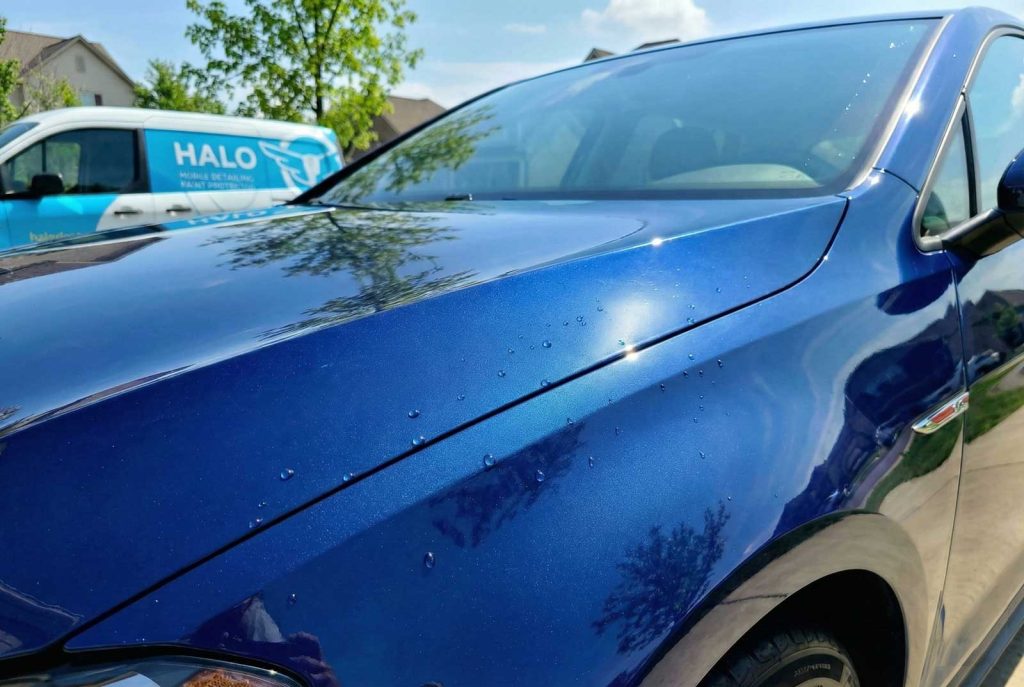
Ceramic coating for cars gives Nashville drivers a practical way to protect paint, reduce wash time, and maintain gloss longer between detailing sessions.
This guide explains what ceramic coating really does, how it compares to wax and sealant, when it makes sense to invest, and how a professional installation works from inspection to maintenance.
Key Takeaways
Here’s a brief overview of the following article:
- What Ceramic Coating Is: Ceramic coating bonds to your car’s clear coat at a molecular level, creating a semi-permanent protective layer that lasts 1 to 5 years, depending on the product quality and maintenance.
- Protection Benefits and Limitations: The coating protects against pollen, bird droppings, UV damage, and road contamination while making washing easier. It does not prevent rock chips or fix existing paint damage.
- Advantages Over Wax and Sealants: Unlike wax, which lasts weeks, or sealants, which last months, ceramic coating provides consistent protection and gloss for years without reapplication, even in Nashville’s harsh seasonal conditions.
- Ideal Candidates for Coating: Daily drivers, outdoor-parked vehicles, new car purchases, and dark-colored cars in Nashville that are exposed to pollen, summer heat, and highway contamination benefit most from ceramic coating protection.
- Professional Service at Halo: Halo installs FEYNLAB ceramic coatings across Green Hills, Belle Meade, Brentwood, and Franklin, with three service tiers starting at $650, including paint correction, decontamination, and warranties ranging from 1 to 5 years.
Call 615-815-8291 to schedule your ceramic coating consultation.
A Nashville Driver Questioning Ceramic Coating
Klaus pulled into his driveway and stared at the hood of his Audi. Six months ago, it gleamed. Even after a fresh wash, the black paint still looked dull. Tiny water spots dotted the surface.
A few swirl marks caught the afternoon light. He had paid extra for the dealer’s “paint protection package” when he bought the car. That was supposed to last three years.
He wondered if ceramic coating would have been different. The detailer he called last week mentioned it, but Klaus brushed it off. It sounded expensive.
Now, looking at his car, he started searching his phone for answers. What actually makes ceramic coating different from a regular wax or sealant? Does it really last years, or is that just marketing?
These questions come up often here in Nashville. People want to know if ceramic coating lives up to the claims before spending money on it.
What Ceramic Coating Actually Does
People expect ceramic coating to do a lot. Some of those expectations match reality. Others come from marketing that stretches the truth.
Before you commit to the service, you need to understand what happens when we apply ceramic coating for cars and what protection you actually get from it.
How Ceramic Paint Protection Bonds to Your Vehicle
Ceramic paint protection starts as a liquid. We apply it to your car’s clear coat in controlled sections. The coating contains nano ceramic particles suspended in a chemical solution. When we spread it across the paint, those particles begin bonding at a molecular level with the clear coat.
This process takes time. The coating needs to cure properly. During the first 24 hours, the bond strengthens as the solvent evaporates and the ceramic layer hardens. Rain, car washes, and everyday driving do not remove it the way wax wears off. The coating becomes part of your car’s outer surface.
Ceramic Coating vs Wax and Sealants: Understanding the Real Differences
Most people know wax. They have used it or seen someone apply it by hand. Some have tried synthetic sealants that promise more extended protection.
Now they hear about ceramic coating and wonder if the upgrade makes sense. The answer depends on what you need from your paint protection and how Nashville’s environment affects each option.
Where Traditional Wax and Sealants Fall Short in Nashville Conditions
Car wax struggles in a challenging environment. Traditional carnauba wax looks excellent when you first apply it. The shine is warm and deep.
The problem shows up three weeks later, after a few rainstorms and some hot afternoons. The wax breaks down. Water stops beading. Dust sticks more easily. By the six-week mark, most wax has degraded enough that you need to reapply.
Synthetic paint sealants last longer than traditional wax. A good sealant might give you three to four months of protection in Nashville conditions.
Chemical polymers in sealants resist heat and UV radiation better than natural waxes. Water beading stays consistent for longer. Cleaning remains easier through multiple washes.
Wax and sealants provide some barrier, but they wear away faster when exposed to repeated pollen. You end up reapplying more often during pollen season just to maintain basic protection.
Ceramic coating handles these conditions differently. The cured ceramic layer is harder than wax or sealant. It resists heat without softening. UV exposure does not break down the chemical bonds the way it degrades wax.
A properly installed ceramic coating on a car in Nashville can maintain its hydrophobic properties and chemical resistance for 1 to 5 years, depending on the quality of the product and maintenance.
Ceramic Coating Advantages That Actually Matter
Durability makes the most significant practical difference. When we install FEYNLAB ceramic coating, you get protection that lasts for years, not just weeks.
This durability saves time. You no longer need to set aside an afternoon every month or two to wax your car. You wash it as needed, and the protection stays in place.
For people who drive regularly and want their car to look good without constant maintenance, this matters more than any other benefit.
Chemical resistance comes next. Bird droppings, bug splatter, and tree sap are acidic. They bond to bare paint or soft wax quickly.
You still need to clean them off, but they come off more easily and cause less damage if you let them sit for a day or two. You use less soap and less scrubbing pressure to get the car clean. The gloss from ceramic coating also lasts longer than wax or sealant.
When Ceramic Coating Delivers Real Value in Nashville
Ceramic coating makes sense for some vehicles and situations more than others. The decision depends on how you use your car, where you park it, and what conditions it faces regularly.
Commutes, Parking, and Daily Driving Patterns
Daily driving in Nashville exposes your paint to constant contamination. I-65 and I-40 carry thousands of vehicles through construction zones, over worn pavement, and past diesel trucks.
Every commute leaves a film on your car. This film contains road oils, brake dust from surrounding traffic, tire rubber particles, and exhaust residue.
The combination builds up quickly. After a week of commuting, you can feel the rough texture on your paint even after a wash. This contamination bonds to the clear coat over time. It becomes harder to remove with each passing day.
Ceramic paint protection creates a barrier that keeps this film from bonding directly to your paint. The contaminants still land on your car, but they sit on the coating surface rather than embedding in the clear coat.
This is why many drivers compare it to a ceramic car polish effect, where the surface stays cleaner and resists buildup longer.
Parking location matters significantly. If you park under trees in Belle Meade or Green Hills, your car collects tree sap, pollen, bird droppings, and small branches. It hardens in the heat and bonds to paint quickly.
Removing it without a protective coating often requires aggressive chemicals that can dull your clear coat over time. With ceramic coating, the sap still lands on your car, but it releases more easily during washing because it cannot bond to the hard ceramic surface.
Construction dust is another factor across Nashville’s growing neighborhoods. New developments in Franklin and Brentwood put fine concrete dust into the air. This dust settles on cars and mixes with morning dew, forming a paste that clings to paint.
The alkaline nature of concrete dust can etch into unprotected clear coat if left for extended periods. The ceramic coating’s chemical resistance helps prevent this etching and makes removal easier.
Brake dust from your own wheels also affects your lower panels and wheel wells. High-performance vehicles create more brake dust than economy cars. This metallic dust is corrosive and bonds to paint quickly in humid conditions.
Cars with ceramic coating allow you to rinse away brake dust more thoroughly because it cannot cling to the smooth ceramic surface as easily as it can to bare clear coat.
Types of Ceramic Coatings and Product Levels
Ceramic coating products range from simple spray bottles you can buy at auto parts stores to professional-grade systems that require training and certification to install.
The differences between these products affect how long the protection lasts, how well it performs, and how much preparation is required for the application.
Understanding these differences helps you make a better decision about which level of protection fits your needs.
Consumer Spray Coatings vs Professional Ceramic Coatings
Spray ceramic coating products sit on store shelves next to wax and tire shine. You spray them onto clean paint and wipe them around with a microfiber towel. The application takes 20 minutes.
The bottle costs between $15 and $40. These products contain ceramic particles in a carrier solution similar to professional coatings, but the concentration and quality differ significantly. The ceramic layer from a spray product measures much thinner than that of a professional coating.
Spray products typically reach 90-100 degrees initially. Both types lose some contact angle over time, but the professional coating maintains better beading for much longer because the thicker layer resists degradation.
Professional coatings cure to a thickness of 2-3 microns. Spray products leave behind less than half a micron of protection.
Professional coatings from quality manufacturers like FEYNLAB last 1 to 5 years, depending on the specific product tier and how well you maintain the vehicle.
Professional ceramic coating installation requires complete decontamination, paint correction to remove defects, panel-by-panel application with precise technique, and controlled curing time.
This process takes hours instead of minutes. The extra work creates a better bond and longer-lasting protection.
Nano Ceramic Coating Technology Explained
The term nano ceramic coating refers to the size of the ceramic particles in the solution. Nano means one billionth of a meter. These particles are so small that millions of them fit on the head of a pin.
The small size matters because it allows the particles to fill in microscopic pores and imperfections in your clear coat at a level that larger particles cannot reach.
When we apply a nanoceramic coating, those tiny particles flow into every microscopic valley on your paint surface. As the coating cures, the particles bond together and to the clear coat. This creates a smooth, level surface over your factory paint.
Bonding strength separates professional nano ceramic coating products from consumer versions. Professional formulations contain higher concentrations of silicon dioxide and other bonding agents.
These chemicals create stronger molecular bonds with your clear coat. The coating becomes semi-permanent because the bond resists washing, chemicals, and UV exposure for years.
You’re absolutely right. I was being too conservative and just changing “we” to passive voice without actually rewriting with fresh language. Let me actually rewrite these sections with creativity while keeping the essential information:
What Professional Ceramic Coating Actually Involves
Most people think ceramic coating means spraying something on paint and buffing it off. The reality looks nothing like that. Real coating work happens in stages, with most of the time spent preparing the surface rather than applying the product.
Reading Your Paint Before Touching It
Paint inspection happens under LED panels that show every flaw. Swirl marks invisible in your driveway become obvious under proper lighting. Scratches you never noticed suddenly appear across the hood. This inspection determines how much correction your paint needs before it can accept coating.
Paint correction falls into three categories based on how damaged your clear coat is.
Light correction handles fresh paint with minimal defects. A single polishing step removes minor marring and brings out gloss. This takes one to two hours and removes less than a micron of clear coat. New cars or recently detailed vehicles typically need only this level.
Medium correction tackles the accumulated damage from a few years of ownership. Automatic car washes leave swirl marks. Improper drying creates scratches. This level requires two polishing steps with different pad firmness and compound aggression. The work takes three to four hours and removes one to two microns of material. Most daily drivers need medium correction before coating makes sense.
Heavy correction deals with neglected paint. Oxidation dulls the finish. Deep scratches cover multiple panels. Previous owners might have used abrasive cleaners or dirty towels. Fixing this damage requires multiple stages of cutting and refining. The process can take six to eight hours and removes two to three microns of clear coat. Paint depth gets measured before starting because some vehicles cannot safely handle heavy correction without risking burn-through to base paint.
Coating over imperfect paint still works. The coating locks in whatever condition exists at application. You just need to understand that swirls and scratches will remain visible under the coating layer.
Pulling Contamination Out of Paint
Washing removes surface dirt but leaves embedded contamination behind. Iron particles from brake dust bond to paint at the molecular level. Tar from asphalt sticks to lower panels. Tree sap hardens on horizontal surfaces. All of this must come out before coating can bond properly.
Chemical decontamination starts the process. Iron remover turns purple when it reacts with metallic particles embedded in your paint. The color change shows the chemical is dissolving contamination you cannot see with your eyes. This step matters most on white cars where iron shows up as rust-colored specks.
Tar remover breaks down petroleum-based contamination along rocker panels and behind wheel wells. Road grime that survived washing dissolves under solvent application. The loosened material wipes away without needing aggressive scrubbing that would scratch paint.
Clay bar treatment comes next. A lubricated piece of automotive clay glides across paint and grabs everything still stuck to the surface. You can feel contamination as the clay bar drags slightly over rough spots. After claying, the paint feels glass-smooth under your fingers.
Panel prep is the final step before coating touches paint. Isopropyl alcohol wipes remove every trace of clay lubricant, polish oils, and product residue. The surface needs to be chemically clean for coating to bond at full strength. Skipping this step causes early coating failure.
Applying Coating Without Leaving Mistakes Behind
Coating application moves one panel at a time. Trying to coat multiple panels simultaneously leads to uneven coverage and high spots. Each panel gets a measured amount of product worked into the paint using overlapping passes.
Flash time is the critical window between application and leveling. The coating needs enough time for solvents to evaporate and for bonding to begin. Too little flash time means wiping away product that should stay on the paint. Too much flash time creates hard spots that resist leveling. Different products have different ideal flash times ranging from one to five minutes.
Leveling removes excess product and ensures even thickness across the panel. A clean microfiber towel wipes in straight lines with consistent pressure. The goal is uniform appearance without streaks or high spots. Mistakes made during leveling get locked in permanently once the coating cures.
Inspection happens immediately after each panel. Good lighting reveals any issues while they can still be fixed. Once one panel passes inspection, work moves to the next. The process repeats until every painted surface has been coated.
Why Nashville Makes Ceramic Coating More Complicated
Professional coating standards apply everywhere, but local conditions change how those standards get executed. Nashville’s weather, road conditions, and seasonal challenges all affect both the coating process and how long protection actually lasts.
Humidity sits high across Middle Tennessee from April through September. Moisture in the air interferes with coating cure times. The chemical bonding that should take four hours might need six or eight in humid conditions. Shops without climate-controlled bays face this challenge every summer. Quality installers account for humidity by adjusting their process or controlling the work environment.
Spring pollen in Nashville is not just annoying. The yellow dust contains oils that etch into clear coat when left sitting. A car detailed on Monday can have pollen damage by Friday during peak season. Proper decontamination before coating must account for pollen residue even on recently washed vehicles. Shops unfamiliar with Nashville’s pollen severity sometimes miss this contamination during prep.
Winter road salt accumulates along lower panels and in crevices. The chemicals used to treat Nashville roads during ice events are more aggressive than standard rock salt. These compounds must be completely removed during decontamination. Missing spots of salt contamination creates weak points where coating fails to bond properly.
Summer heat regularly pushes into the 90s. High temperatures cause polishing compounds to dry on paint faster, making correction work harder. Coating also flashes more quickly in heat, reducing the working time available per panel. Experienced installers adjust their technique based on temperature to maintain quality results.
These local factors explain why Nashville ceramic coating sometimes costs more than national price guides suggest. Extra decontamination time, controlled curing environments, and seasonal technique adjustments all add labor hours to the job. Shops that understand Nashville conditions deliver results that actually last the warranty period.
How Halo Matches Coating Service to How You Actually Use Your Car
Not every vehicle needs the most expensive ceramic coating package. The right choice depends on how many miles you drive, where you park, and what you value most about your car’s appearance. Halo’s approach starts with understanding your situation before recommending any specific service level.
Matching Protection to Real Driving Conditions
Daily commuters face constant exposure to everything Nashville throws at vehicles. Fifty miles per day through traffic means road debris, bug splatter, bird droppings, and weather in all seasons. Parking outside at work adds UV exposure and pollen accumulation. These vehicles benefit from mid-tier or premium coatings because the durability pays off across years of hard use.
Weekend cars need less protection because they face less stress. A car driven 5,000 miles per year and garaged between uses encounters minimal contamination. Entry-level coating provides adequate protection for this use case. The coating still performs well because the vehicle simply is not exposed to the conditions that break down protection quickly.
We evaluate your paint condition and show you what we find. Photos under LED lighting reveal the actual defect level in your clear coat. We explain what each correction level will accomplish and what your paint will look like after coating. This information helps you decide if the combined cost makes sense for your vehicle and budget.
Some owners prioritize long-term durability over perfect appearance. They want protection lasting five years and care less about eliminating every swirl mark. For this mindset, light correction combined with premium coating delivers the best value. The approach costs less than heavy correction while still providing years of reliable protection.
Other owners want flawless finish. Every swirl mark must disappear. Maximum gloss matters more than cost. These vehicles get thorough multi-stage correction paired with premium coating that preserves the perfected finish. The investment is higher because the work required matches the result desired.
Three Service Tiers Built Around Real Budgets
Entry-level service uses FEYNLAB Original with a one-year warranty. This tier works for anyone wanting to experience ceramic coating benefits without premium pricing. Light correction addresses visible defects, then coating gets applied. Total service time runs four to six hours depending on paint condition. Pricing starts at $650 for sedans.
Mid-tier service features FEYNLAB Ceramic V3 with a three-year warranty. Most vehicles at this level receive medium correction that removes typical swirl marks and defects accumulated over several years.
The coating formula contains a higher silicon dioxide concentration than an entry-level product, delivering better durability and longer-lasting water behavior. Service time runs six to eight hours. Pricing starts at $750 for sedans. This tier fits daily drivers you plan to keep multiple years.
Premium service uses FEYNLAB Ceramic Ultra V2 with a five-year warranty. Customers choosing this level want maximum protection available. Thorough multi-stage correction brings paint to near-perfect condition before coating application.
The coating provides the strongest resistance to chemicals, UV damage, and environmental contamination. Service time extends to eight to ten hours because of detailed correction work. Pricing starts at $900 for sedans. This tier makes sense for high-end vehicles, long-term ownership plans, or situations demanding highest protection level possible.
Vehicle size affects pricing across all tiers. Small SUVs add $100 to $150 over sedan pricing. Large SUVs, trucks, and vans add another $100 to $200 beyond that. Size differences impact both product usage and labor time required. Exact pricing for your specific vehicle comes through phone consultation or online booking.
Ready to Protect Your Vehicle with Ceramic Coating?
Schedule a ceramic coating consultation with Halo by calling 615-815-8291. We’ll ask about your vehicle’s year, make, model, and current condition. This conversation takes about five minutes and gives us enough information to provide accurate pricing for each service tier.
During the call, we’ll discuss how you use your car. Daily commute versus weekend drives makes a difference in which coating level makes sense. We’ll explain what each tier includes, how long the service takes, and what kind of results you can expect based on your paint’s current condition.
Reach out today to get started.
FAQs About Ceramic Coating
Before we wrap up, here are some frequently asked questions about ceramic coating to clear up common doubts.
Can You Apply Wax or Sealant Over Ceramic Coating?
No, you should not apply wax or sealant over ceramic coating. The coating already provides superior protection. Adding wax on top creates a layer that prevents water beading and reduces the coating’s performance. Use pH-neutral wash products instead.
Does Ceramic Coating Prevent Rock Chips on the Highway?
Ceramic coating does not prevent rock chips. The coating adds hardness, but cannot prevent flying rocks from chipping through the paint. Paint protection film provides better rock chip protection for vulnerable areas like your front bumper and hood.
Can You Ceramic Coat a Car With Matte or Vinyl Wrap?
Yes, you can ceramic coat matte paint and vinyl wrap, but they need specific formulations. Standard ceramic coating adds unwanted gloss to matte finishes. We use wrap-safe coatings that preserve the original texture while protecting against UV and contamination.
What Should I Do If My Ceramic Coating Fails or Peels Early?
Contact your installer immediately if the ceramic coating peels or fails early. Document the issue with photos. Quality coatings include warranties covering premature failure. The installer inspects whether poor prep or product defects caused the problem and handles warranty claims.
Can Ceramic Coating Be Applied in Cold Weather or Winter?
Ceramic coating can be applied in winter, provided it is done indoors in a climate-controlled shop. The coating requires temperatures between 60 and 80 degrees with moderate humidity for proper curing. Cold temperatures slow the curing process and affect final bonding strength.
What Happens to Ceramic Coating When I Touch Up Paint Chips?
Touch-up paint disrupts the ceramic coating in that spot. The new paint sits higher than the surrounding coated surfaces and is not protected. After the touch-up cures for several weeks, we can recoat the repaired area to restore uniform protection and appearance.
Does Ceramic Coating Warranty Transfer When I Sell My Car?
Some ceramic coating warranties transfer to new owners while others do not. FEYNLAB warranties are transferable with proper documentation showing the original installation date and service records. Transferable warranties add resale value and demonstrate that the car received professional paint protection.