
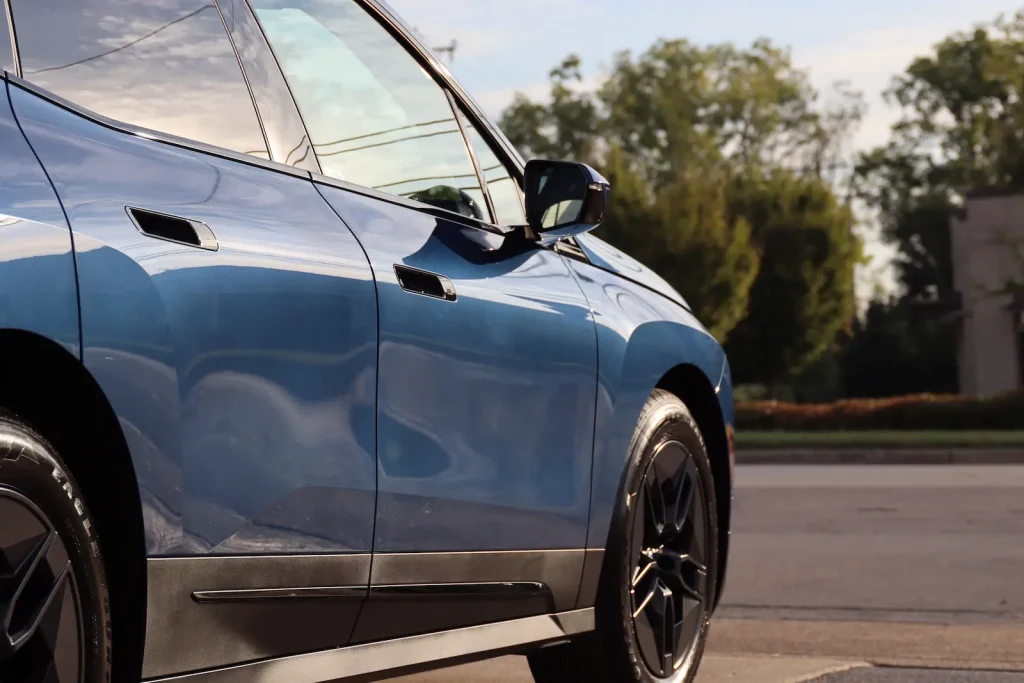
A homeowner in 12 South called us last fall after his second attempt at a DIY ceramic coating. He had bought a well-reviewed kit from an automotive store, watched several YouTube tutorials, and spent a full Saturday applying it to his Tahoe. By Tuesday he had streaks across the hood and an uneven shine across the doors. He asked what it would cost to fix it. The honest answer was that fixing it would cost more than starting over with a professional install would have cost the first time.
DIY ceramic coating products are real and have improved a lot in recent years. They produce some hydrophobic performance and a degree of paint protection at a fraction of the upfront cost. They also have meaningful limits compared to professional-grade coatings, particularly around durability, application quality, and what happens when something goes wrong. This post lays out the real differences so you can decide what fits your situation.
Key Takeaways
DIY Kits Run $30 to $150. Professional Installs Run $800 to $2,500. The price gap is real. So is the durability and coverage gap.
DIY Coatings Last 1 to 2 Years. Professional FEYNLAB Coatings Last 2 to 7+ Years. Durability scales with the product grade and the prep work.
Application Surface Prep Is Where DIY Falls Short: Professional installs include paint correction, decontamination, and panel-by-panel surface prep. Most DIY kits skip these steps.
Streaks, High Spots, and Uneven Coverage Are Common DIY Issues: Once a coating cures incorrectly, removal usually requires polishing the paint back down. This can cost more than starting professional.
Professional Coatings Carry Real Warranties: Most DIY products come with limited or no meaningful warranty. Professional coatings are typically warrantied for the duration of their rated lifespan.
Book a ceramic coating consultation at halodetailing.com or call 615-815-8291.
What DIY Ceramic Coating Actually Is
DIY ceramic coating products are silica-based liquids you apply with an applicator pad. The chemistry is similar in principle to professional coatings. Both use silicon dioxide, often abbreviated as SiO2, to create a hard hydrophobic layer on top of your paint. The difference is in the formulation, the concentration of active ingredients, and the application requirements.
Most DIY kits target the consumer market, which means manufacturers formulate them for easy application. Ease of application usually comes from lower SiO2 concentration, which limits how durable and hard the final coating can be. The trade-off is real. You get a coating you can apply yourself, but the coating itself is less robust than what a professional product delivers.
Application is the second variable. DIY kits typically instruct users to apply the coating to a washed vehicle. Professional installs include a paint correction step, an iron decontamination step, a clay bar step, and a panel-by-panel inspection before any coating goes down. The prep work takes a full day on its own for many vehicles, and it directly determines how the coating bonds and performs.
Where DIY Coatings Actually Work
DIY ceramic coatings genuinely help in certain situations. A daily driver with paint in reasonable condition that is otherwise unprotected benefits from a DIY ceramic coat. The hydrophobic effect makes washing easier. The coating adds a thin layer of UV protection. Water beads on the paint. Bird droppings and bug splatter clean off more easily.
For an inexpensive vehicle that the owner does not plan to keep long-term, DIY coating is a reasonable choice. The cost is low. The effort is manageable on a Saturday afternoon. The performance is real, even if it does not match a professional install.
DIY coatings also work for owners who enjoy the process of detailing their own vehicles. The application is part of the appeal. Some enthusiasts do their own coating work the same way some homeowners do their own oil changes. The result is solid, and the satisfaction is the point.
Where DIY Coatings Fall Short
The honest limitations show up in three areas. First is durability. DIY coatings rarely match the manufacturer claims in real-world Nashville conditions. A coating marketed as two-year often shows degraded hydrophobic performance in twelve months. Professional FEYNLAB tiers deliver their rated durability consistently because both the product and the prep are calibrated together.
Second is application quality. DIY application is the highest-risk part of the process. Streaks happen when you wipe the coating at the wrong time. High spots happen when you miss residue during the wipe-down. Uneven coverage happens when light conditions hide spots during application. These mistakes are minor when caught immediately. When they cure, they often require polishing the paint to remove, which means more cost and more risk to the paint.
Third is the warranty gap. DIY products carry limited warranties at best, and the warranties they do offer rarely cover application issues. If a DIY coating fails or streaks, you are typically on your own to fix it. Professional installs carry warranties that cover both product and application, and a reputable installer stands behind the work.
The True Cost Comparison
The headline price comparison is misleading. A $50 DIY kit looks dramatically cheaper than a $1,500 professional install. The actual cost comparison needs to account for the full picture.
The DIY cost includes the kit, applicator pads, microfiber towels, prep solutions, a quality wash, sometimes clay bar treatment, and the time investment. Total out-of-pocket for a proper DIY job often runs $100 to $200 once you account for supplies. Time investment is six to ten hours for a full vehicle.
If the DIY coating lasts twelve to eighteen months and needs reapplication, the multi-year cost climbs. Three reapplications over five years runs $300 to $600 in supplies plus eighteen to thirty hours of time. A single professional Level II FEYNLAB install protecting the same vehicle for five years often comes in at a comparable total cost, with significantly better performance throughout. For more on how long ceramic coating lasts in Nashville conditions, see our durability guide.
The real cost gap appears when DIY goes wrong. A failed DIY coating that requires paint correction to remove can run $500 to $1,500 in professional polish work, plus the cost of starting over with a new coating. That outcome wipes out the savings completely.
When Professional Makes the Difference
Professional ceramic coating is the clearer choice in several specific situations. New vehicles with perfect factory paint benefit most from professional installation because the paint condition is ideal and the coating is being applied to its best possible substrate. The protection you get matches the investment you made in the vehicle.
Luxury vehicles, including German cars and Teslas common in Green Hills, Brentwood, and Belle Meade, also benefit. Owners of these vehicles typically want consistent appearance, long durability, and warranty coverage that DIY products do not provide. The math works because the vehicle is being protected for the long haul.
Vehicles with existing paint defects need correction before any coating goes on. Professional installers include this step. DIY coating over swirl marks, water spots, or oxidation locks the defects in under the coating, making them harder and more expensive to address later.
What a Professional Install Includes at HALO
A professional ceramic coating install at HALO Mobile Detailing is a multi-step process spread across one or two days depending on package. We wash and decontaminate the vehicle. An iron remover dissolves embedded particles. We then clay-bar the paint to lift contaminants. Our team assesses any defects.
For most installs, light paint correction follows. We polish the paint to remove minor swirl marks and restore clarity before coating goes down. We then wipe the vehicle down with an isopropyl alcohol panel prep to remove polishing oils. The installer applies the coating panel by panel in controlled lighting, letting it flash and cure properly.
We document the install with photos. You receive the manufacturer warranty paperwork plus our installation warranty. Aftercare instructions and a maintenance plan come with every install. Visit halodetailing.com or call 615-815-8291 to schedule a consultation.
Frequently Asked Questions
Can I apply a DIY ceramic coating over a professional one?
Yes, as a top-up or refresh, DIY ceramic coatings work as maintenance layers on top of a professional base coating. Many professionals recommend a periodic top-up of a maintenance spray that contains SiO2. Pure DIY ceramic coating over a professional coating is also possible but rarely necessary if the professional coating is performing as expected.
How do I know if my DIY ceramic coating is failing?
The earliest signs are reduced water beading, water spots that no longer rinse off easily, and a less-slick feel when running your hand across the panel. As the coating fails further, hydrophobic performance disappears completely and the paint becomes more vulnerable to contamination again. Most DIY coatings show these signs at twelve to eighteen months in Nashville conditions.
What is the most common DIY ceramic coating mistake?
Skipping decontamination is the most common mistake. Applying coating over a clay bar step makes a meaningful difference in how the coating bonds. The second most common mistake is missing the wipe-off window. Most coatings require wiping after a specific flash time, and missing that window leaves streaks or high spots that are hard to remove later.
Can a professional fix a bad DIY ceramic coating job?
Sometimes. If you catch the issues early, machine polishing can remove the failed coating and the paint takes a fresh coating correctly. If the failed coating has been on for months, removal becomes more difficult and the cost climbs. Always call before attempting to fix a DIY coating issue yourself. Some attempted fixes make the problem worse.
Will professional coating make my car easier to wash going forward?
Yes, significantly. A properly installed professional coating reduces wash time, eliminates the need for waxing, and makes contaminants easier to remove. Most clients report cutting their wash time in half once the coating is in place. The maintenance routine becomes simpler rather than more complicated.