
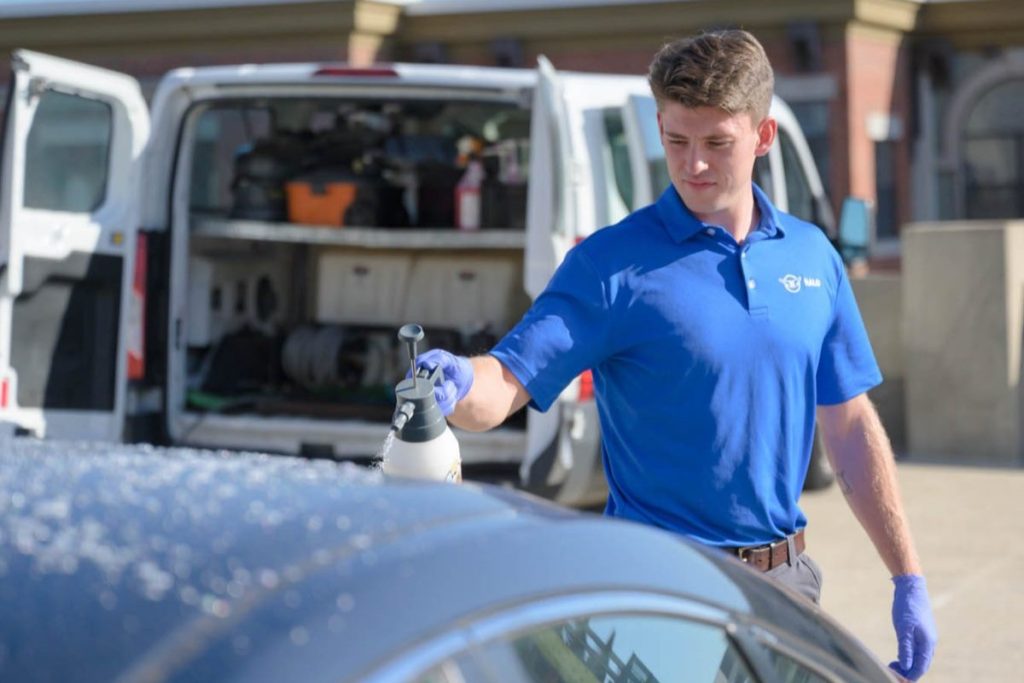
Laura moved to Green Hills three years ago and washes her white Lexus herself every Saturday morning in the driveway. She composts, uses reusable bags, and drives a hybrid, but it hadn’t occurred to her that her car washing routine was sending contaminated runoff directly into Nashville’s storm drain system and eventually into the Cumberland River. When a neighbor mentioned it, she started looking into the alternatives.
The environmental impact of conventional car washing is real and largely invisible to the person holding the hose. A standard home wash uses 80 to 140 gallons of water per vehicle, and that water carries soap, brake dust, heavy metals, and road grime straight into storm drains without any treatment. Professional mobile detailing addresses this differently, using controlled water systems, biodegradable products, and proper waste containment that prevents runoff entirely.
Halo serves Nashville, Brentwood, Franklin, and surrounding areas with mobile detailing that’s fully self-contained. We bring our own water and manage waste on-site. Nothing runs into your driveway drain.
Key Takeaways
Here’s a brief overview of what we’ll cover:
- Home washing is the biggest offender: A single home car wash sends 80 to 140 gallons of contaminated water into storm drains. Most of that reaches local waterways untreated.
- Professional mobile detailing contains waste: Halo’s mobile units manage runoff on-site. No contaminated water enters Nashville’s storm system from our services.
- Biodegradable products matter: Professional-grade eco-friendly formulations clean as effectively as harsh alternatives and break down safely in wastewater treatment.
- Ceramic coating is an environmental choice too: Long-lasting coatings reduce how often you need to wash, which reduces total water usage and product consumption over time.
- Frequency discipline helps: Washing on a consistent schedule with the right products prevents the kind of heavy contamination buildup that requires more aggressive, resource-intensive cleaning to address.
Get in touch at 615-815-8291 to schedule a mobile detail that keeps your car clean and keeps Nashville’s waterways cleaner too.
Why Home Washing Causes More Harm Than Most People Realize
When you wash your car in a residential driveway, the water doesn’t go to a treatment facility. It flows into a storm drain, which in Nashville connects directly to the Cumberland River system without passing through any filtration. What goes down that drain includes phosphates from car soap, oil and grease from road residue, brake dust carrying heavy metals like copper and zinc, and whatever pesticides or debris have collected on the vehicle’s exterior.
The EPA has identified residential car washing as a significant non-point source of water pollution in urban areas. The volume compounds quickly. Nashville has hundreds of thousands of registered vehicles. If even a fraction of owners wash weekly, the total contamination load entering local waterways is substantial.
Commercial car washes without reclamation systems create similar problems at larger scale. Some facilities capture and treat their water, but many older locations simply drain into the municipal system. The concentration of chemicals used in automated washes often exceeds what biodegrades quickly in natural water.
How Mobile Detailing Reduces Environmental Impact
Professional mobile detailing controls the entire process in a way home washing can’t. Halo’s units carry their own fresh water supply and use containment systems to capture wash water and prevent runoff. That water gets disposed of through proper municipal wastewater channels rather than flowing untreated into storm drains.
Water volume is also significantly lower than home washing. Professional technique, combined with quality products used at proper dilution ratios, achieves thorough cleaning with a fraction of the water a garden hose requires. This matters particularly during Nashville’s summer months when municipal water demand peaks and conservation becomes important.
The environmental benefits of mobile detailing extend beyond water as well. One mobile unit serving multiple vehicles in a neighborhood creates less total transportation impact than each household driving to a fixed-location wash facility.
Products That Actually Break Down
Not all “eco-friendly” car care products perform equally. The difference between marketing language and genuine environmental performance comes down to chemistry.
Biodegradable surfactants in professional formulations reduce surface tension for thorough cleaning while breaking down completely in wastewater treatment systems. These aren’t diluted versions of conventional cleaners. They’re purpose-built formulations that clean effectively at lower concentrations, which means less total chemical enters the waste stream per vehicle.
Plant-based degreasers handle wheel contamination and brake dust without petroleum solvents. Microfiber tools remove surface contamination with minimal product usage when used correctly. Interior products based on natural ingredients clean leather, fabric, and trim without the volatile organic compounds that off-gas into the cabin and linger on surfaces your family touches.
Halo uses professional-grade products selected for both performance and environmental safety. This isn’t a compromise between clean results and responsible practices. The products we use clean better than consumer alternatives and break down more safely afterward.
Ceramic Coating as a Long-Term Environmental Choice
Most people think of ceramic coating as a paint protection investment, which it is. But there’s an environmental dimension worth understanding.
A properly applied FEYNLAB ceramic coating lasts one to five years depending on the tier. During that time, the coating’s hydrophobic properties cause contamination to bond less aggressively to the surface. Water sheets off more completely. Pollen, road grime, and brake dust rinse away more easily during regular washing.
The practical result is that coated vehicles need washing less frequently to stay clean, and each wash requires less product and effort to achieve good results. Over a three to five year coating life, the total water, soap, and maintenance product consumed is meaningfully lower than an uncoated vehicle washed with the same regularity.
For Nashville drivers who park outside and deal with the spring pollen season, this reduction in wash frequency is significant. The ceramic coating cost guide covers what the investment looks like across each FEYNLAB tier.
Practical Eco-Friendly Habits Between Professional Services
Professional detailing handles the deep work, but the choices made between appointments affect environmental impact too.
Washing every two weeks rather than weekly reduces total water consumption without letting contamination accumulate to the point where more aggressive cleaning becomes necessary. Using a two-bucket hand wash method rather than a running hose cuts water usage substantially for the same result. pH-neutral soap at the correct dilution cleans thoroughly without requiring excess product volume.
Avoiding automatic brush washes protects the paint from swirl marks and protects local water systems from poorly treated effluent. Quick detailer sprays for light dust and fingerprints between washes handle minor contamination with minimal water and product. For everything that helps maintain results between professional appointments, the guide on maintaining your car between details covers what actually works at home.
Nashville’s Specific Environmental Context
Nashville’s growth creates increasing pressure on local water systems. The Cumberland River and its tributaries receive runoff from a rapidly expanding metro area. As more vehicles join the road network and as development extends into areas like Nolensville, Thompson Station, and Spring Hill, the cumulative impact of vehicle washing practices becomes more significant.
Spring pollen season from March through June is the period of highest washing frequency for most Nashville drivers. That concentration of washing activity corresponds with a spike in storm drain contamination. Professional services that contain runoff during this high-volume season make a meaningful difference in what reaches local waterways.
Nashville’s summer heat also matters. UV radiation and high surface temperatures accelerate the breakdown of unprotected paint, which leads to more aggressive correction and product use over time. Durable protection applied early reduces how much work surfaces need over the life of the vehicle.
Get in touch at 615-815-8291 or book your appointment online to schedule a detail that works for your vehicle and for Nashville’s waterways.
FAQs for Eco-Friendly Car Care
Does eco-friendly mobile detailing cost more than a regular car wash?
No. Halo’s pricing is based on vehicle size and service level, not product type. The same packages available through standard mobile detailing apply. You’re not paying a premium for environmentally responsible practices. That’s just how the service operates.
How much water does professional mobile detailing actually use?
Significantly less than home washing. A standard home wash uses 80 to 140 gallons. Professional mobile detailing uses a fraction of that through controlled application and professional technique, and the water used is contained and disposed of properly rather than flowing into storm drains.
Are eco-friendly products as effective as traditional cleaners?
Yes. Professional-grade biodegradable formulations are purpose-built for automotive surfaces and clean effectively at appropriate concentrations. Many outperform consumer alternatives because they’re designed for professional application and proper contact time.
Does ceramic coating really reduce environmental impact?
Over its coverage period, yes. Coated surfaces repel contamination more effectively, which means less frequent washing and less product per wash over the life of the coating. A five-year coating applied to a daily driver produces measurably less total wash resource consumption than the same vehicle maintained without coating.
What should I avoid doing at home to reduce environmental impact?
Avoid washing in the driveway with a running hose when storm drain access is nearby. Avoid soap with phosphates, which fuel algae growth in rivers and lakes. Avoid automatic brush washes that discharge into storm systems. If you do wash at home, use a bucket rather than a running hose, and choose a pH-neutral soap at the correct dilution ratio.