
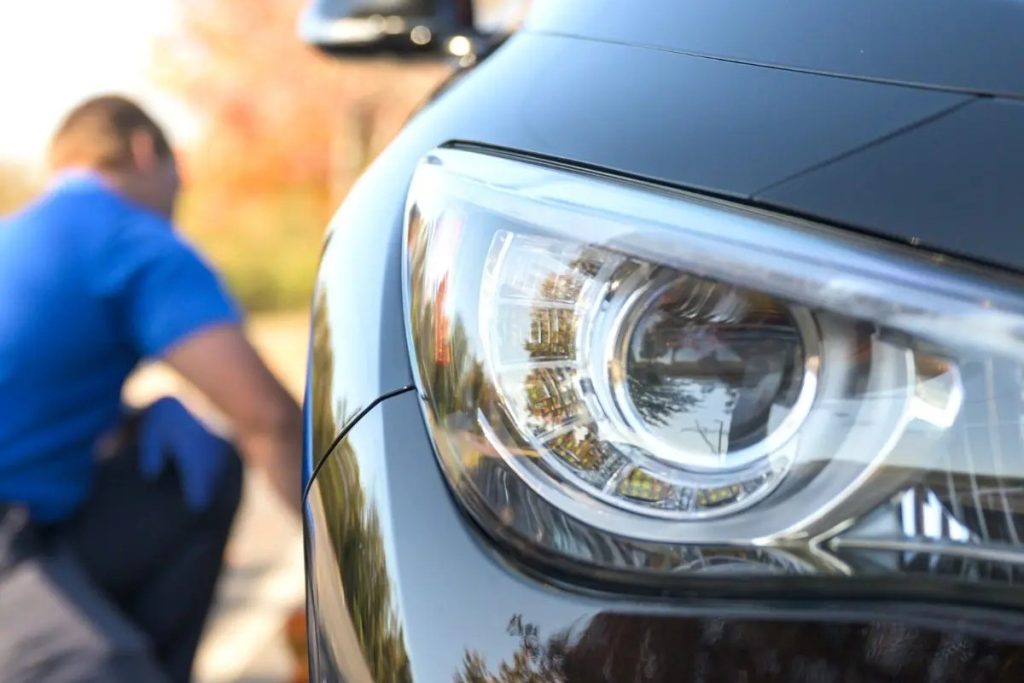
Mark found a ceramic coating deal on Groupon for $99. The shop was 20 minutes from his Brentwood home. He booked it, dropped off his black BMW X5, and picked it up the same afternoon looking better than it had in years. Three months later, the coating was peeling in patches, water had stopped beading entirely, and the paint looked worse than before the appointment. He called us to fix it. The removal and proper recoating cost him more than twice what professional installation would have run from the start.
That pattern is more common than it should be. Budget ceramic coating services cut corners in ways that aren’t visible on the day of application. The problems show up weeks or months later, by which point the shop is unreachable or simply unresponsive. Understanding where those corners get cut helps you avoid the same outcome.
Halo is a FEYNLAB certified installer serving Nashville, Brentwood, Franklin, and surrounding areas. Here’s an honest breakdown of why cheap coatings fail.
Key Takeaways
Here’s a brief overview of what we’ll cover:
- Product quality is the foundation: Professional-grade coatings like FEYNLAB use advanced silica chemistry that bonds at the molecular level. Budget alternatives use basic silicone or acrylic blends that break down under UV exposure within months.
- Surface prep is where most time is spent: Proper ceramic coating requires complete decontamination and paint correction before a single drop of coating goes on. Budget services skip or rush this, and the coating fails because the surface wasn’t ready.
- Application requires training: Temperature, humidity, coating thickness, and cure time all affect the outcome. Factory-certified installers train specifically on these variables. Untrained applicators get them wrong.
- Failed coatings cost more to fix than proper installation costs upfront: Removing a failed coating requires aggressive polishing that cuts into your clear coat. You pay twice, and your paint is worse off than if you’d never coated it.
- Warranty terms reveal a lot: Real ceramic coatings carry multi-year warranties backed by the manufacturer. A 90-day guarantee is a sealant, not a coating.
Call us at 615-815-8291 if you want to talk through what a legitimate coating installation actually involves.
The Product Quality Problem
The coating in a $99 special is not the same product professional installers use. Legitimate ceramic coatings like FEYNLAB’s formulations contain silica dioxide with cross-linking agents that form a durable, chemically resistant bond with the clear coat. The raw materials alone for a professional-grade coating cost well over $100 per vehicle before any labor is factored in.
Budget alternatives substitute basic silicone polymers or acrylic blends that are marketed using the word “ceramic” because it contains trace silica. These products create temporary water beading and gloss for a few weeks, but they lack the molecular structure needed to hold up under real conditions. Nashville’s summer UV alone breaks them down fast. What might last six months in a mild climate often fails within two or three months here.
When these coatings break down, they don’t fade gradually and evenly. They fail in patches, creating an uneven surface that traps dirt and makes washing harder than it would have been on uncoated paint.
Surface Preparation Shortcuts
Professional ceramic coating requires complete surface preparation before any product is applied. That means an iron remover to pull out brake dust particles embedded in the paint, a clay bar treatment to lift bonded surface contamination, and paint correction to remove swirl marks, water spots, and oxidation. The coating can only bond as well as the surface underneath it allows.
This preparation takes four to six hours on most vehicles. Paint correction can add several more hours depending on how much damage the paint has. Budget coating services cannot provide this at a $99 price point. They wash the car, do a quick wipe-down, and apply the coating. The result looks good on pickup day because the coating temporarily fills and glosses over the surface. A few weeks later, the coating lifts off with the contamination layer underneath it, and the underlying paint defects are back.
Contaminants sealed under a coating also cause long-term damage. Water spots that should have been corrected continue etching into the clear coat underneath, invisible until the coating fails and reveals what’s been happening beneath it.
Application Technique and Environment
Ceramic coating application requires precise conditions. Temperature, humidity, how thickly the coating is applied, and cure time all affect whether the coating bonds properly. FEYNLAB certification includes specific training on each of these variables because they directly determine the outcome.
Common application failures include coating applied too thickly, which creates high spots that show as streaks or uneven gloss. Working in direct sunlight causes the coating to cure too fast on the surface while the underlayer stays soft, preventing proper bonding. High humidity interferes with the cross-linking chemistry during cure. Vehicles delivered before the coating has fully hardened get water spots baked in during the critical first 24 to 48 hours.
Trained installers understand these conditions and either control for them or adjust their process accordingly. Untrained applicators often don’t know what they’re doing wrong until the customer calls with complaints weeks later.
What Failed Coating Removal Actually Costs
When a cheap coating fails, it has to come off before a proper coating can go on. That process requires aggressive polishing to cut through the failed coating material and any contamination bonded to it. It removes more clear coat than the original paint correction would have.
Some failed coatings leave residue that interferes with polishing compounds, requiring multiple correction stages to fully remove. By the time the paint is clean enough to accept a proper coating, the clear coat is thinner than it was before the budget service touched it. Future correction work has less material to work with.
Mark’s BMW needed two correction stages for full removal, which added time and cost before the FEYNLAB installation even started. His total spend ended up significantly higher than a professional job would have cost from the beginning, and his paint has less clear coat remaining as a result.
What Legitimate Pricing Actually Covers
Halo’s FEYNLAB ceramic coating tiers start at $650 for Level I on a sedan, $750 for Level II, and $900 for Level III, scaling with vehicle size. Most installations include paint correction to prepare the surface properly before the coating goes on.
Level I carries a one-year warranty. Level II covers three years. Level III covers five years. These warranties are backed by FEYNLAB as the manufacturer, not just the installer.
That pricing reflects real costs: quality coating materials, four to six hours of preparation labor, trained application, controlled curing conditions, and warranty support. A service priced at a fraction of this cannot cover those costs. Something is being skipped, and it’s usually the preparation that determines whether the coating holds.
How to Evaluate a Ceramic Coating Quote
Before booking any coating service, ask specific questions. How long does the preparation process take? What decontamination steps are included? What is the specific coating product and who manufactures it? What does the warranty cover and who backs it?
Professional installers answer these questions in detail because the process justifies the price. Shops that can’t explain their preparation steps or who offer same-day application for a full coating job are skipping the work that makes coating last.
FEYNLAB certification and similar factory credentials require training, testing, and ongoing education. Certified installers understand the product chemistry and application requirements because the manufacturer has verified it. That certification is worth checking before committing.
Franklin and Brentwood drivers who park outside year-round get real value from proper ceramic coating because Nashville’s climate creates continuous paint challenges across every season. A coating that fails in three months protects against none of it.
Get in touch at 615-815-8291 or book your appointment online and we’ll walk you through what the installation process actually involves before you commit to anything.
FAQs for Why Cheap Ceramic Coatings Fail
How can I tell if a ceramic coating price is too good to be true?
Professional ceramic coating materials alone cost well over $100 per vehicle before any labor. Services priced below $400 to $500 are almost certainly using inferior products or skipping essential preparation. Ask specifically what coating product they use and what the preparation process involves before booking.
What happens if I apply a new coating over a failed one?
A new coating cannot bond properly over failed coating residue. The old coating has to come off through polishing first, which adds time and cost and removes clear coat in the process. Always have failed coating professionally removed before recoating.
Can mobile ceramic coating services match shop quality?
Yes, when the installer has proper training and uses professional-grade products. Halo brings everything needed for controlled application conditions to your location. The quality of the installer and the product matters far more than the location.
How long should a legitimate ceramic coating last?
FEYNLAB Level I carries a one-year warranty. Level II covers three years. Level III covers five years. These are manufacturer-backed warranties, not just installer promises. Coatings that offer 90-day guarantees are sealants, not true ceramic coatings.
Is paint correction always necessary before ceramic coating?
Not always, but it’s needed for most vehicles. We assess paint condition before every installation. If your paint has visible swirl marks, water spots, or oxidation, correction removes those defects before the coating seals the surface. Skipping correction locks existing damage in place under the coating.