
James drives a 2022 BMW 5 Series. He washes it himself every couple of weeks, keeps it mostly clean, and has been wondering whether a professional detail is worth $250. He found prices all over the place online, read some glowing reviews, read some skeptical ones, and still wasn’t sure what to make of it.
That question deserves a straight answer, not a sales pitch. So here it is: professional detailing is worth it for some people in some situations and not worth it for others. The right answer depends on what you’re driving, how you use it, what shape it’s in, and what you’re actually hoping to get out of the service. If you want a quick look at what car detailing in Nashville actually covers, that’s a helpful place to start.
This article walks through the real cost-benefit math, the limits of doing it yourself, and which specific services tend to return the most value.
Key Takeaways
Here’s a brief overview of what we’ll cover:
- Honest ROI: Professional detailing returns real value when your vehicle has accumulated damage, when you’re preparing to sell, or when you’re protecting a high-value investment. It makes less sense for drivers who are already maintaining their vehicles well.
- Time vs. Money: A proper DIY detail on a full-size SUV takes four to six hours and requires equipment most people don’t own. That time has a real dollar value that belongs in the comparison.
- DIY Limits: Regular maintenance washing is easy to do yourself. Paint correction, extraction cleaning, and ceramic coating installation are not.
- Best ROI Services: Interior deep cleaning, paint decontamination, and ceramic coating tend to return the most value relative to their cost.
- Honest Skip List: New vehicles in good condition, garage queens, and vehicles scheduled for trade-in within a year are often better served by simpler options.
Give us a call at 615-815-8291 if you’d like to talk through what your vehicle actually needs before booking anything.
What Makes This Question Tricky
Most people asking this are really asking one of three things. Can professional detailing do something I can’t do myself? Can it do it well enough to justify the cost? And will the results last long enough to matter?
Those questions actually have different answers depending on the specific service and where your vehicle is at. The honest version is this: professional detailing is genuinely irreplaceable in some areas and pretty easy to skip in others.
What Professional Detailing Can Do That DIY Realistically Can’t
There’s a real gap between what most car owners can accomplish at home and what a trained detailer can do with the right equipment. That gap is narrower for basic cleaning and much wider for restoration work.
Extraction Cleaning
Consumer vacuum cleaners pull surface debris. Professional extractors inject heated cleaning solution into carpet fibers and upholstery, then pull the liquid back out along with embedded dirt, oils, pet dander, and bacteria. The difference shows up after the very first pass.
You can rent a Rug Doctor and get close, but it’s not the same equipment, the technique matters, and doing it wrong leaves moisture in your carpet that leads to mold. This is one area where the equipment gap is real and matters.
Paint Correction
Swirl marks, fine scratches, water spot etching, and oxidation all require machine polishing to address. Consumer-grade polishers exist, but using them without proper training on the wrong paint type or with the wrong product combinations can cause holograms, burn through clear coat, or create new defects that weren’t there before.
Nashville compounds the problem. Summer UV exposure accelerates oxidation. Spring pollen from oak trees carries acidic compounds that etch into clear coat during humid nights. Automatic car washes leave thousands of micro-scratches per visit. Addressing that kind of accumulated damage at home carries real risk. Take a look at what professional car detailing includes to get a better sense of where the DIY line actually sits.
Ceramic Coating
Applying ceramic coating correctly requires immaculate paint prep, proper lighting, controlled temperature, and technique that only comes with practice. A coating applied over contaminated or uncorrected paint traps problems underneath and fails early. This one isn’t a good candidate for doing it yourself.
The DIY Cost Comparison Most People Get Wrong
The comparison people usually run looks like this: a professional detail costs $250, detailing supplies cost $80, so professional detailing is three times more expensive. That math ignores a few important things.
Equipment Costs Add Up Fast
Doing a proper detail yourself requires a dual-action polisher, a foam cannon, a wet-dry vacuum or extractor, multiple types of microfiber towels, buckets with grit guards, and a range of chemical products. A reasonable starter kit runs $400 to $600. If you only use it twice a year, the per-use cost of equipment alone exceeds a professional appointment for the first several years.
Your Time Has a Dollar Value
A thorough detail on a full-size SUV in average condition takes four to six hours for someone who knows what they’re doing. For someone who doesn’t, add more time on top of that. If your Saturday is worth anything to you, those hours belong in the comparison.
There’s a Real Skill Curve
The first few times you use a machine polisher, you’ll be slower and less confident than you will be after a year of practice. The learning curve isn’t just a time cost. It’s also a risk cost on your vehicle’s paint.
None of this means DIY is always wrong. For drivers who genuinely enjoy the process, have the space and equipment, and use it consistently enough to justify the investment, it makes sense. But the “it’s cheaper to do it yourself” argument is less clear-cut than it first appears.
When Professional Detailing Genuinely Pays Off
Your vehicle has accumulated real damage
If you haven’t had a professional detail in over a year, Nashville’s driving environment has likely left its mark. Tree sap from summer parking. Pollen etching from spring. Brake dust embedded in the wheel faces. Scratch patterns from automatic car washes.
A professional detail on a neglected vehicle doesn’t just clean it. It removes contamination that regular washing can’t reach and applies protection that extends how long the next cleaning lasts. The longer you go between services, the more restoration work is needed and the more value the detail delivers.
You’re preparing to sell
Well-maintained vehicles sell faster and command higher prices. A clean, detailed car signals ownership quality to buyers. The interior smell, the condition of the leather or fabric, the clarity of the paint. All of it registers before a buyer consciously evaluates anything.
A professional detail four to six weeks before listing typically returns more than its cost in final sale price. Time it right: too early and the results fade before buyers arrive, too close to the sale and you’re scrambling. For a full breakdown of which services actually move the needle, take a look at the guide on detailing your car before selling in Nashville.
You own a vehicle worth protecting
A $90,000 Range Rover, an Aston Martin, a well-kept classic. The math changes when the vehicle is worth protecting seriously. The cost of a professional detail as a percentage of the vehicle’s value is small. The cost of damage from poor maintenance or a DIY mistake on that paint is not.
This is also where ceramic coating starts making clear financial sense. A $900 coating that protects $80,000 worth of paint for three years is a different calculation than the same coating on a $12,000 commuter car.
Your time is genuinely valuable
Mobile detailing exists because it saves you time. If your Saturday is your only free day and you’d spend four hours on a detail, the real comparison isn’t $250 vs. the cost of supplies. It’s $250 vs. four hours of your weekend plus supplies plus the risk of getting it wrong. For a lot of Nashville professionals, that comparison lands very differently.
When Professional Detailing Makes Less Sense
Your car is new and you’re already taking care of it
Factory paint on a new vehicle with consistent hand washing doesn’t need restoration. It needs protection. If you’re already washing carefully and parking thoughtfully, a full detail in the first few months is mostly paying for results you already have.
The first service worth booking on a new vehicle is usually protection-focused: ceramic coating before the first winter, or a correction pass once light swirls start to appear around six to twelve months in.
You’re planning to trade it in within the year
A professional detail will make your vehicle look better at trade-in, but the return at a dealership is modest. Dealers reprice based on market conditions and mechanical condition more than cosmetics. A thorough cleaning on your own and a strong negotiating position on price will generally serve you better than spending $300 on a detail before handing the keys over.
The exception is private sale. Private buyers respond to presentation in ways dealers simply don’t.
You’re a genuine enthusiast with the right setup
Some drivers maintain their vehicles at a professional level themselves. They own real equipment, use correct technique, and stay consistent. If you’re in this group, you already know the limits of what you can do and when to call in a professional for correction work or coating installation.
Most casual DIY detailers are not in this group, even when they think they are.
Which Services Deliver the Best Return
Not all detailing services carry the same return on investment. Here’s a practical look at where the money actually goes further.
Interior Deep Cleaning
A professional interior detail runs $170 to $245 depending on vehicle size and condition. For a car that sees daily use with kids, pets, or food, the extraction cleaning alone produces results that visibly transform the interior. Odor elimination, stain removal, and leather or fabric treatment are all difficult to replicate at home with consumer tools.
Interior condition also affects resale value and, in some cases, your ability to sell the vehicle at all. A car with pet odor embedded in the carpet is a harder sell regardless of how the exterior looks.
Paint Decontamination
Clay bar treatment removes bonded contamination that washing simply can’t touch. For a vehicle that’s been through Nashville’s spring pollen season without protection, a clay decontamination followed by paint sealant produces paint that feels and looks noticeably different. It’s a cost-effective service that restores a baseline of protection before problems have a chance to worsen.
Ceramic Coating
Ceramic coating carries the highest upfront cost of any detailing service, ranging from $650 to $1,200 depending on the coating level and prep work required. It also has the clearest long-term math. For a detailed look at what drives those numbers, the guide to ceramic coating cost in Nashville breaks it all down.
A five-year coating on a vehicle you drive daily eliminates the recurring cost of wax and sealant, reduces how much restoration work future details require, and preserves paint condition in a way that holds resale value. For Nashville drivers who park outdoors year-round, the coating tends to pay for itself over its coverage period.
Basic Exterior Wash and Wax
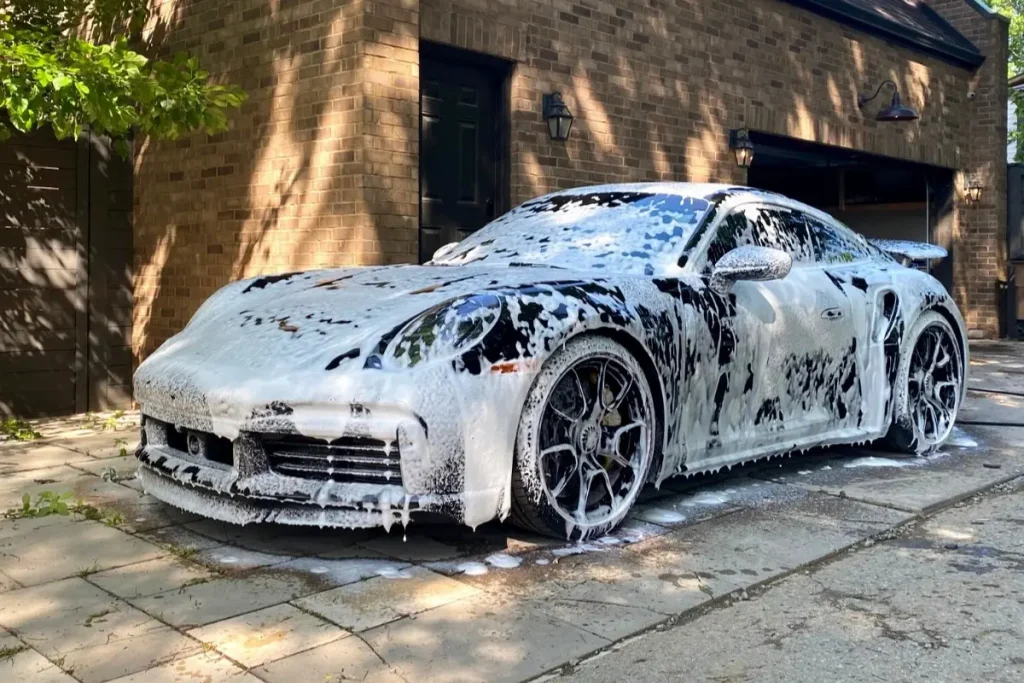
A standalone exterior wash and wax is the service most people can realistically handle themselves. With a foam cannon, quality soap, and good microfiber towels, the results from a careful hand wash are close to what a basic exterior service produces. This is the category where DIY competes most directly with professional pricing.
The Honest Bottom Line
Professional detailing is worth it when the gap between what a professional can do and what you can reasonably do yourself is wide enough to justify the cost. For restoration work, extraction cleaning, paint correction, and ceramic coating, that gap is real. For basic maintenance washing, it’s pretty narrow.
The other honest answer is that most Nashville drivers don’t maintain their vehicles as consistently as they think they do. A car that gets hand washed monthly, professionally detailed twice a year, and garaged overnight holds up very differently over five or ten years than one that gets automatic car washes every few weeks and a gas station vacuum once in a while.
If you’re not sure what your vehicle actually needs, get in touch at 615-815-8291 or book an appointment online. We’re happy to take a look at the car and give you an honest read on its condition before recommending anything.
FAQs for Is Professional Detailing Worth It
How do I know if my car needs a professional detail or just a wash?
Run your clean hand across a washed panel. If it feels rough or gritty, the paint has bonded contamination that a standard wash didn’t remove. Check the interior under direct light for staining, embedded dirt, or odors that linger. If either of those is present, a professional detail is addressing problems a simple wash can’t.
Can a professional detail remove scratches?
Light surface scratches and swirl marks in the clear coat can be reduced or removed through machine polishing. Deep scratches that reach the base coat or primer require paint touch-up or panel repainting. A professional can tell you which category yours fall into after a proper inspection.
How long do professional detailing results last?
Interior detailing results typically hold up two to four months with normal use. Exterior protection from wax or sealant runs three to four months. Ceramic coating lasts one to five years depending on the product and conditions. How long results last also has a lot to do with how you care for the vehicle afterward.
Is mobile detailing as thorough as going to a shop?
Yes. Halo’s mobile units carry professional-grade equipment, products, and their own water supply. The quality of the work isn’t limited by location. Mobile detailing adds convenience without cutting corners.
How often should Nashville drivers schedule a professional detail?
Most daily drivers do well with professional detailing two to four times a year. Vehicles with ceramic coating can often go twice a year for maintenance. Vehicles with heavy use, kids, or pets usually benefit from quarterly interior service at a minimum.