
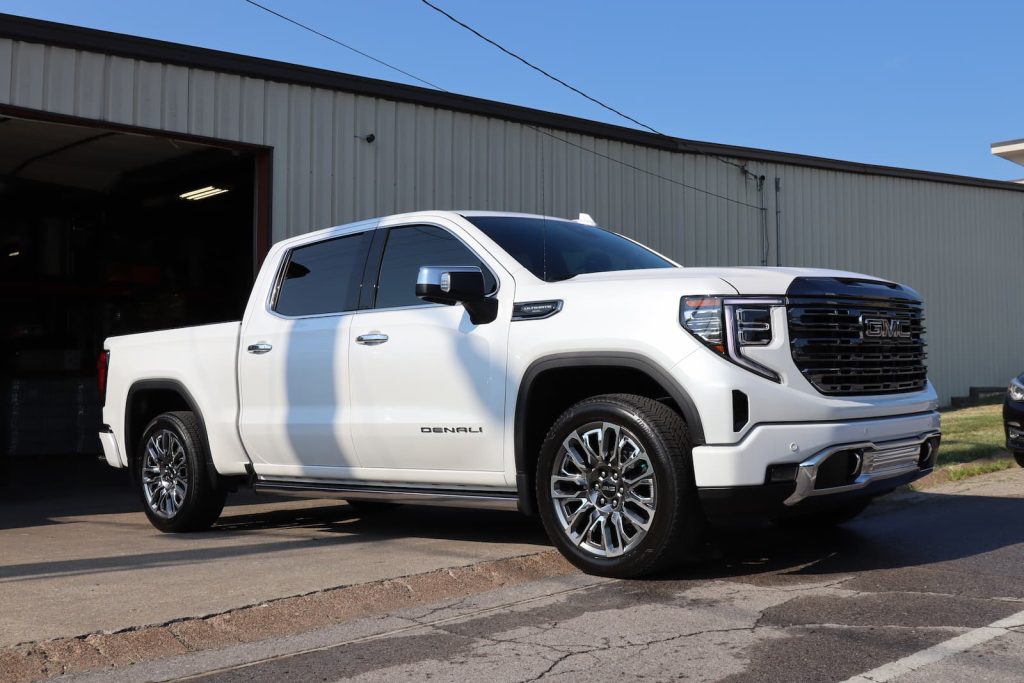
David keeps a Tundra in a Brentwood driveway, and it works for a living. Weekends it hauls mulch and a trailer. Weekdays it is a commuter. He ran it through a tunnel wash a few times and never felt like the result held. The bed still had a film in it. The rocker panels still looked dull. When he finally booked real truck detailing, the technician spent almost as long on the bottom eighteen inches of the vehicle as on everything above it. That is the part most washes never touch.
Trucks get treated like big cars, and they are not big cars. They sit higher, they carry things, and they collect road spray in places a sedan never exposes. A pickup also has far more paint soaking up Tennessee sun. Good truck detailing accounts for all of that instead of running a sedan process on a larger canvas. This post covers what changes when the vehicle is a pickup, and how the detailing process shifts to match.
Key Takeaways
Trucks Need Bottom-Up Attention: Rocker panels, wheel wells, and running boards catch road spray that a standard wash pass never reaches.
The Bed Is Its Own Job: Spray-in liners hold grit and stain, and cleaning one properly takes real time rather than a quick rinse.
Height Changes the Work: Roofs and upper door frames need ladders or steps, so a lifted truck is genuinely more labor than a stock one.
Surface Area Drives Time: More paint and more glass means longer polishing, longer drying, and a longer coating cure.
Interiors Take Heavier Abuse: Work boots, gravel, and dog hair make truck interiors different from commuter-car interiors.
To book truck detailing at your home or job site, reach out through HALO’s contact page or call 615-815-8291.
Why Trucks Get Dirty Differently
Ride height is the whole story. A pickup sits eight to twelve inches taller than a sedan. That changes what the vehicle drives through and what it throws back on itself. Road spray arcs up onto the rocker panels and stays there. Gravel from a job site pits the lower doors. Truck wheel wells are cavernous next to a car’s, and they pack with mud that dries hard and traps moisture against metal.
Then there is the bed. Nashville trucks actually get used, so the bed sees mulch, lumber, gym bags, coolers that leaked, and the occasional split bag of concrete. A spray-in liner has texture on purpose, for grip. That same texture grabs fine grit and holds it. Rinsing a lined bed just moves the loose dirt around.
Tailgates take a beating too. People sit on them, load over them, and drop things on the edge. The top lip is one of the most scratched surfaces on any pickup, and it is easy to skip, because you do not see it walking up.
Truck Detailing Requires a Different Approach
A proper service works bottom up rather than top down. Wheels, wells, and lower panels come first, with enough dwell time for baked-on brake dust and road film to release. Go straight to the paint instead, and you drag that grit across the finish later.
The bed becomes its own section of the appointment. Clear the loose debris, work cleaner into the liner texture, agitate it, rinse it out. On a truck that hauls regularly, that step alone can outlast the entire interior of a small car.
Height calls for steps and extended tools, so the roof and the tops of the doors actually get cleaned rather than reached at. On a lifted truck the roof can sit over seven feet up. Nobody details that properly standing flat-footed with a wash mitt.
Paint work scales with the surface. A crew cab long bed carries substantially more painted area than a mid-size sedan. Any polishing or ceramic coating on a truck takes proportionally longer. That is not an upsell. It is arithmetic.
Does a Work Truck Need It?
This question comes up constantly, usually as some version of “it is just going to get dirty again.” The honest answer runs the other way. A truck that works is a better candidate for protection than one that sits in a garage.
Paint damage on a truck is mechanical and chemical more than cosmetic. Gravel chips break the clear coat. Mud holds salt and moisture in the wheel wells all winter. Sun bakes the roof and hood of a vehicle that usually parks outside, because it does not fit comfortably in a garage. All of that is cumulative, and none of it cares whether you washed the truck last week.
Clean and protect a truck on some kind of rhythm and it holds up better where it counts, which is the lower body, the bed, and the horizontal surfaces. Plan to keep it long term, or sell it eventually, and that maintenance shows in the condition. Our notes on keeping a vehicle in shape between details cover the habits that stretch the gap between appointments.
Interiors Built for Boots
Truck interiors take punishment commuter cars do not. Work boots track gravel and clay into the carpet, and it grinds in. Rubber floor liners hide a layer of grit underneath that no vacuum pass will reach. Dogs ride in trucks more than in sedans, and the hair works into seat seams.
Center consoles in modern pickups are enormous, and they collect everything. Cup holders, storage bins, the tray under the rear seat, the door pockets. A real interior service pulls the liners, works the seams, and empties the storage rather than wiping visible surfaces and calling it done.
Cab glass is large and the seating position is tall, so leather in a truck sees more direct sun than most car interiors. Regular conditioning matters more here than in a sedan that lives in a parking garage.
Booking Truck Detailing in Nashville
Convenience matters for trucks specifically. A lot of them belong to people who spend the day on a job site or at an office, with no spare afternoon to sit somewhere and wait. So we come to the truck. Driveway, job site, office lot, wherever it sits, we arrive with our own water, power, and equipment and work around your day.
To schedule truck detailing anywhere in the Nashville area, get in touch through HALO’s contact page or call 615-815-8291. Tell us how the truck earns its keep and we will talk through what level of service fits it.
Frequently Asked Questions
How much more does truck detailing cost than a car?
Truck pricing steps up from the standard sedan rate, with separate tiers for small trucks and SUVs and for large trucks, SUVs, and minivans. That difference reflects real added labor, not a surcharge. There is more paint, more glass, more interior, and a bed to deal with. Our packages page lists the current tiers.
Can you clean a spray-in bed liner?
Yes. A spray-in liner needs cleaner worked into the texture and agitated, not simply rinsed. The grip pattern that makes the liner useful is exactly what traps grit and staining. It shows on a bed that has hauled for a few years.
Do you detail lifted trucks?
We do. Extra height means extra equipment and a little more time to reach the roof and upper panels safely, and we account for that when we scope the job. Mention the setup when you book so we plan for it.
Is ceramic coating worth it on a truck that gets used hard?
Coating will not stop rock chips, and nothing short of a physical film does. What it does is make the lower panels, bed rails, and wheels far easier to clean, and it holds up well against the chemical side of the damage. Our take on whether ceramic coating is worth it covers when it pays off and when it does not.
How long does a full truck detail take?
Longer than a car, usually by a couple of hours. Size, condition, and how hard the bed and interior have been used all move that number. We give a realistic window once we have seen the vehicle.